
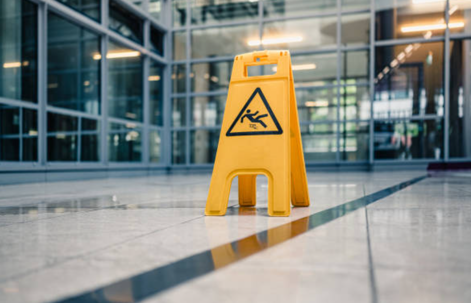
You slipped, hit the ground hard, and now the property owner’s insurance company is already hinting that it was your fault. Maybe they say you were not watching where you were going or that the danger was obvious. Meanwhile, you are dealing with pain, medical appointments, and time away from work, wondering if anyone is actually responsible for what happened.
In this situation, most people in Tennessee hear a lot of opinions and very little law. Store managers, landlords, and insurance adjusters may sound confident when they say there is “no case,” but their goal is to protect the property owner and the insurer. To make a good decision for yourself, you need clear information about what Tennessee premises liability really requires and how courts actually look at slip and fall and other property related injuries.
At Law Office of Stephen R. Leffler, P.C., we have been representing injured people in Memphis and across Tennessee since 1985, including many clients hurt in grocery stores, apartment complexes, parking lots, and other properties. We deal with Tennessee premises liability rules regularly and we see how these cases play out in local courts and with local insurers. In the sections that follow, we will walk through the key parts of Tennessee premises liability law and explain what they mean for someone in your position.
Call (901) 509-9112 today to setup a consultation, or contact us online to learn more. Our attorneys are ready to help.
What Tennessee Premises Liability Really Means
Premises liability is the legal term for holding a property owner or occupier responsible when an unsafe condition on their property injures someone. In Tennessee, these cases are built on negligence. That means the injured person must show the owner did not act with reasonable care under the circumstances, not simply that the injury happened on the owner’s property. This is a crucial distinction, because many people assume that any fall at a business automatically creates liability, which is not how Tennessee law works.
Every premises liability case in Tennessee revolves around four elements. The owner or occupier must have owed you a duty of care. They must have breached that duty by allowing an unreasonably dangerous condition to exist or by failing to warn about it. That breach must have caused your injury, and you must have real damages, such as medical bills, lost wages, or ongoing pain and limitations. If one of those pieces is missing, the claim becomes much harder to prove.
It is also important to understand who can be legally responsible. In Memphis, that might be a national retailer that operates a local store, a regional grocery chain, a local landlord, a property management company, or a tenant that controls part of a building. Responsibility depends on who controlled the area where you were hurt and who had the ability to fix or warn about the hazard. Because we have handled premises liability cases in many kinds of Memphis properties since 1985, we are familiar with how these control and responsibility questions usually play out.
When Tennessee Property Owners Owe You a Duty of Care
Not everyone on a property is treated the same way under Tennessee law. As a starting point, owners and occupiers owe a duty of reasonable care to people who are lawfully on the property, such as customers, tenants, delivery drivers, and invited guests. Reasonable care typically includes inspecting the property at reasonable intervals, fixing hazards that they know about or should know about, and warning about dangers that are not obvious.
For example, when you walk into a Memphis supermarket as a customer, the store is inviting you in to shop. Tennessee law expects that store to take reasonable steps to keep the aisles, entryways, and parking lot reasonably safe. The same is true for an apartment complex that provides stairwells, walkways, and common areas for tenants and their visitors. A social guest who visits a friend’s home is also owed a basic level of safety. The homeowner should fix or warn about hidden dangers they know about, such as a loose step or a broken handrail.
Trespassers are treated differently, but the rules are not as simple as “no duty at all.” In general, Tennessee law gives property owners more protection when someone is on their land without permission. However, there can still be situations where an owner is responsible, such as when they know people frequently cut through their property and they allow a serious, concealed hazard to remain without any warning. Because these lines are not always obvious, we often look closely at exactly why a person was on the property and whether the owner reasonably should have anticipated their presence.
How Notice of a Hazard Can Make or Break a Tennessee Premises Claim
Once we know there was a duty of care, the next critical question is whether the owner had notice of the dangerous condition. In Tennessee premises liability cases, notice often decides whether a claim succeeds or fails. Property owners are not required to prevent every possible accident. They are required to act reasonably when they know, or should know, about a danger that could hurt someone.
There are two main types of notice. Actual notice means the owner or their employees actually knew about the hazard. For example, if a customer tells an employee that there is a spill on the floor in a Memphis grocery store aisle and the employee does nothing for a noticeable period of time, that is a strong example of actual notice. Constructive notice means the owner should have known about the problem because it existed long enough or occurred often enough that a reasonable inspection would have uncovered it.
Consider a different scenario. A jar falls and shatters on a store floor, and you slip on the liquid seconds later. The store may argue there was no way for them to know about it in time to fix it, and a Tennessee court might agree there was no notice. Compare that to a broken step on an apartment stairwell that tenants have complained about for weeks or months. In that case, even if a landlord claims they never saw it, written complaints, maintenance requests, or a long visible crack can support constructive notice, because a reasonable landlord should have known.
Proving notice is where evidence becomes crucial. In nearly four decades of handling premises cases in Memphis, we have requested surveillance video, incident reports, maintenance logs, and records of prior complaints. Surveillance footage might show how long a puddle was on the floor before your fall. Maintenance records might reveal a pattern of short term fixes on a problem stair. Without that evidence, a claim can devolve into your word against the property owner’s. With it, we can often show that the hazard existed long enough that the owner should have addressed it.
Open and Obvious Dangers and Comparative Fault in Tennessee
Another issue that comes up quickly in Tennessee premises cases is whether the hazard was open and obvious or whether there were warning signs. Property owners and insurers often argue that if you could see the danger, or if there was any sign nearby, you are entirely to blame. Tennessee law looks at this differently, through the lens of comparative fault, and that difference can be critical to your case.
Tennessee follows a modified comparative fault rule. If a case goes to trial and a jury finds that you were less than 50 percent at fault for your injuries, you can still recover damages. Your compensation is reduced by your percentage of fault. If you are found 50 percent or more at fault, you do not recover. This means that the question is not usually whether you were perfect, but rather how fault should be divided between you and the property owner.
Open and obvious dangers and warning signs usually affect that percentage, not whether you can bring a claim at all. Suppose there is a bright yellow caution cone near a spill in a Memphis retail store. A court or jury might find that the store acted partially reasonably by placing a cone, but if the liquid was spread far beyond the cone or left for an unreasonable amount of time, the store can still bear a significant share of fault. If a step is visibly crumbling and you use it daily at your apartment because there is no alternative, the landlord does not get a free pass just because the defect is visible.
Insurers also like to focus on your behavior, pointing to distractions like looking at a phone or carrying bags. Tennessee’s comparative fault system does take your actions into account. A jury might decide, for example, that you were 20 percent at fault for not watching more carefully, but that the store was 80 percent at fault for ignoring a long standing hazard. We regularly evaluate how insurers in Tennessee are likely to argue comparative fault and build cases that fairly reflect both the owner’s choices and the realities of everyday life, such as using a phone in a shopping aisle.
Common Types of Tennessee Premises Liability Cases
Many people are unsure whether their situation even fits under Tennessee premises liability law. The reality is that these claims arise in a wide range of everyday settings in and around Memphis. Some of the most frequent cases involve slip and falls in grocery stores, big box retailers, and convenience stores. Liquids from spilled drinks, leaking coolers, or mopped floors without proper warnings can create hidden hazards in busy aisles.
Trip and fall incidents are also common. Uneven sidewalks, parking lot potholes, unmarked changes in floor height, and loose mats or rugs can all cause serious injuries. In apartment complexes and office buildings, we often see claims related to defective stairs or railings, such as loose handrails, broken steps, or stairs that do not meet basic safety expectations. Inadequate lighting in stairwells and parking areas can turn otherwise minor defects into major hazards because people simply cannot see what is in front of them.
Other premises cases involve falling objects, such as merchandise that is stacked too high on shelves or stored unsafely overhead. There are also negligent security cases, where a criminal act takes place because of conditions like broken locks, consistently dark walkways, or a failure to address repeated problems on the property. In each scenario, the legal question comes back to whether the owner or occupier knew or should have known about the risk, had time to act, and failed to take reasonable steps to keep lawful visitors safe.
Because we have handled premises liability cases connected to many types of Memphis properties, from national retail chains to small landlords, we pay close attention to how each setting works in practice. For example, a national retailer may have corporate policies about floor inspections and spill cleanup that become key evidence. An apartment complex may use a management company that controls maintenance decisions. Understanding these details helps us identify where responsibility really lies and how to gather the right proof.
Evidence That Strengthens a Tennessee Premises Liability Claim
In a Tennessee premises liability case, the facts on the ground often matter more than anything written in a policy manual. The stronger your evidence, the better your chances of proving notice, fault, and the full impact of your injuries. Some of the most important evidence can be gathered in the hours and days after a fall, long before a lawsuit is ever filed.
Photographs and video from the scene are extremely valuable. Images showing the spill, broken step, uneven surface, or poor lighting help document the exact condition that caused you to fall. Photos of your clothing and shoes can also matter, because insurers sometimes try to blame footwear or argue that nothing about the scene was dangerous. If there are cameras on site, surveillance footage can show how long a hazard was present and what employees did or did not do about it.
Surveillance video is also one of the most time sensitive forms of evidence. Many Memphis area stores and apartment complexes use digital recording systems that automatically overwrite footage after a certain period. In our practice, we send preservation letters and requests for footage quickly, because waiting can mean the only impartial witness to what happened disappears forever. Incident reports, written complaints, and maintenance records are equally important, since they can show prior complaints about the same hazard or repeated short term fixes that did not solve the underlying problem.
Your medical documentation is another critical piece of the puzzle. Seeking prompt treatment, following your doctor’s advice, and keeping track of follow up visits create a clear record linking your injuries to the fall. Records of missed work, reduced hours, or job changes caused by your injuries help support a claim for lost wages and future earning losses. Because we keep our caseloads manageable and stay in close contact with clients, we work with them to collect and organize these records so that the full effect of the injury is clear to the insurer or a jury.
Deadlines and Pitfalls in Tennessee Premises Liability Claims
Even strong facts can be undermined by missed deadlines or early missteps. In Tennessee, many personal injury claims, including many premises liability cases, are subject to a relatively short statute of limitations. In many situations, you have one year from the date of the injury to file a lawsuit. There are exceptions and special rules in some circumstances, but waiting too long can bar your claim completely, no matter how clear the fault may seem.
Beyond formal deadlines, there are practical pitfalls that can weaken a case. Insurance adjusters often contact injured people quickly and ask for recorded statements. What you say in those conversations can later be used to argue that you were mostly at fault or that your injuries are not as serious as you describe. Social media posts about the fall or your activities afterward can also be taken out of context. Skipping follow up medical appointments or ignoring a doctor’s restrictions can give insurers ammunition to claim your injuries are minor or unrelated.
We work with Tennessee clients every day to navigate these issues. Our role includes advising you on how to handle communications with insurers, what to document, and how to balance real life obligations with medical advice. After nearly four decades in practice, we have seen how easily someone can unintentionally damage a legitimate claim by trying to be polite or by assuming the insurer is on their side. Getting guidance early can help you avoid those traps and protect your rights under Tennessee law.
How an Experienced Tennessee Premises Liability Lawyer Can Help
Putting all of this together on your own can be overwhelming, especially when you are dealing with pain and uncertainty about the future. A Tennessee premises liability lawyer’s job is to shoulder the legal and investigative burdens so you can focus on healing. At Law Office of Stephen R. Leffler, P.C., we start by listening carefully to your account, reviewing any photos or documents you already have, and identifying what additional information is needed to evaluate your claim under Tennessee law.
From there, we typically investigate the property and the parties involved. That can include requesting surveillance video and incident reports, examining maintenance and inspection records, and talking with witnesses or employees who may have seen the hazard before your fall. In many cases, we work with your medical providers to understand your diagnosis, treatment plan, and long term prognosis so we can fully explain the impact of the injury to the insurer or, if necessary, a jury.
We also handle communication with property owners and insurance companies. When adjusters rely on no notice arguments or claim you are entirely at fault, we use the evidence gathered to push back and show how Tennessee’s notice and comparative fault rules really apply. Our firm has recovered multimillion dollar results in serious injury cases, which reflects the level of preparation and strategy we bring to every matter, including premises liability claims. At the same time, we maintain a small firm feel, keeping you informed and involved in decisions so that the strategy reflects your priorities, not just ours.
Talk With a Tennessee Premises Liability Lawyer About Your Options
A fall on someone else’s property can change your life in seconds, but what happens afterward depends heavily on details like notice, comparative fault, and the evidence that gets preserved. Understanding how Tennessee premises liability law works gives you a clearer picture of where you stand, yet the law can only take you so far without a focused investigation into your specific situation. You do not have to try to interpret statutes and insurance letters alone while you are recovering.
If you were hurt in a Memphis store, apartment complex, parking lot, or other property, a conversation with a lawyer who knows Tennessee premises liability can help you make informed choices about your next steps. At Law Office of Stephen R. Leffler, P.C., we combine decades of experience with personal, attentive service, guiding clients from the first phone call through resolution. To talk about what happened and get a case specific evaluation, contact us today.